If Oil Is Escaping Now
Keep people and pets away from affected ground and avoid ignition sources near the spill. Do not wash oil into a drain or try to disperse it with detergent. Do not approach unstable storage or attempt tank repairs.
Contact your insurer and fuel supplier for direct advice about an active spill. Use the Environment Agency's environmental incident reporting route if pollution has reached or threatens water or the wider environment. This website form is not a monitored emergency channel and does not confirm that a contractor has been dispatched.
Only take photographs from a safe position. If you can see where oil is travelling, describe drains, ditches, watercourses and nearby buildings without entering contaminated areas.
Find The Source Before Choosing The Repair
The apparent leak may come from the tank body, a fitting, a valve or a length of supply pipe. Oil can travel along surfaces before appearing somewhere else. A wet base or smell near the boiler does not on its own identify the failed component.
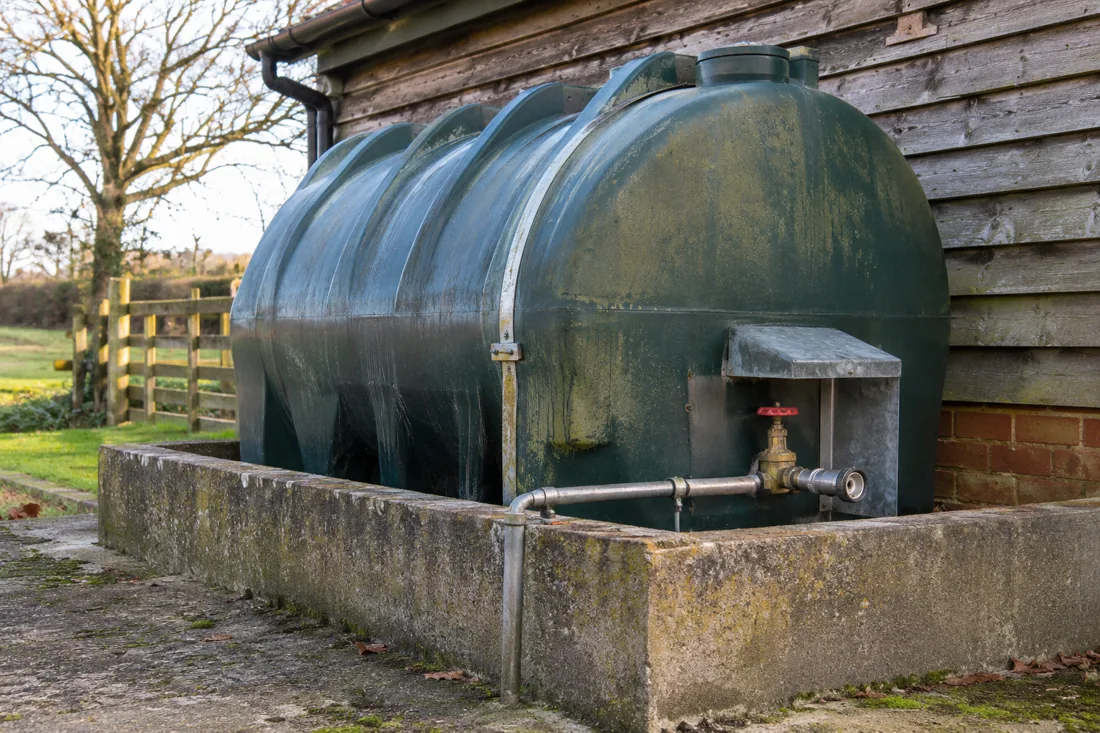
Plastic splits, pronounced distortion and significant steel corrosion need a condition assessment. Cleaning does not repair structural damage, and a replacement fitting will not solve a failed tank wall. The source and extent of the damage determine whether repair is appropriate or tank replacement is needed.
Do not assume that oil inside an outer bund means there has been no problem. It may indicate a primary-tank leak, while water in the bund can complicate the situation. Report the liquid and visible condition without trying to pump out or drain the containment yourself.
Recover Fuel And Stabilise The Situation
A response plan may involve moving remaining fuel into suitable temporary storage to prevent further loss. The quantity, condition and access determine what can be recovered and how it will be handled. Contaminated liquid needs separating from fuel that can be retained.
Temporary storage must have a suitable location and connection arrangement. It cannot be improvised from household containers or assumed available immediately. Agree who supplies, installs, monitors and collects it, with any hire charges and limitations recorded clearly.
For an oil-heated home, discuss heating and hot-water needs alongside the recovery plan. For a business, identify affected plant and the consequences of an outage. Safe containment comes first, while continuity options depend on the installation and the condition found.
Tank Work And Ground Clean-Up Are Separate
Replacing a leaking tank stops that source of loss, but it does not remove oil that has soaked into ground or building materials. Contamination can require environmental investigation and a separate remediation programme. Insurer approval may be needed before certain investigation or reinstatement costs are committed.
Record when the issue was first noticed, recent deliveries and any change in level. Retain photographs and invoices, and keep a note of advice received from the insurer or relevant authority. Do not discard affected material or cover a stained area before the investigation route is agreed.
Where a buried tank or underground line is involved, access and sampling can be more complex. Our underground tank guide explains why closure records and environmental evidence need separate consideration. A tank that is no longer losing oil may still need investigation of the earlier release.
What To Send Once Immediate Help Is Arranged
Give the full postcode, contact details and whether the leak appears ongoing. Describe the tank material, approximate capacity, gauge level and whether fuel is visible inside the bund or outside it. Say when it last received a delivery and what it supplies.
Include safe photographs of the whole tank, the apparent leak and the route from road to storage. Mention slopes, nearby drains, ditches, wells and watercourses. For premises with controlled access, provide the site contact and any restrictions affecting response equipment.
Costs And Records To Agree
Fuel recovery, temporary storage, tank repair or replacement and contaminated material removal are different cost elements. The amount of affected ground may not be known at the first visit. Ask for immediate stabilisation work to be distinguished from later investigation and reinstatement.
Keep the assessment, repair or installation records and the relevant waste documents. Where soil is removed, request a record of the quantity and destination. Evidence of what was found and treated is more useful for an insurer or future buyer than a general statement that the tank has been changed.
Questions About Leaking Oil Tanks
Should I Wait For A Reply To The Form?
An active leaking oil tank should not wait for a reply to this form. Contact your insurer or fuel supplier directly and use the official environmental incident route where pollution is involved. The form can provide details for subsequent assessment, but it does not book an emergency attendance or confirm that help is on the way.
Can A Leaking Plastic Tank Be Patched?
A leaking plastic oil tank needs professional assessment, and a structural split generally calls for replacement rather than a patch. Do not add fuel or attempt a household repair to keep it operating. The immediate plan should address remaining oil, containment and any affected ground before a permanent replacement is put into service.