Replacement Or Another Kind Of Work?
Cracks, distortion, weeping seams, serious corrosion and an unstable base all need assessment. Cleaning can remove contamination, but it cannot restore a failed tank wall. A leaking plastic tank should not be treated as a candidate for a makeshift patch while another delivery is ordered.
A sound tank in the wrong position presents a different question. Relocation may be worth discussing, but moving an older tank exposes it to handling and does not remove its existing defects. Send pictures of the tank and the proposed new position so the options can be compared on their actual scope.
Specify The New Storage
Capacity should reflect consumption, delivery habits and available space. A bigger tank may reduce delivery frequency but also changes the footprint, support requirements and potential consequences of a spill. Tell us whether the supply is domestic kerosene, commercial heating oil or fuel for other equipment.
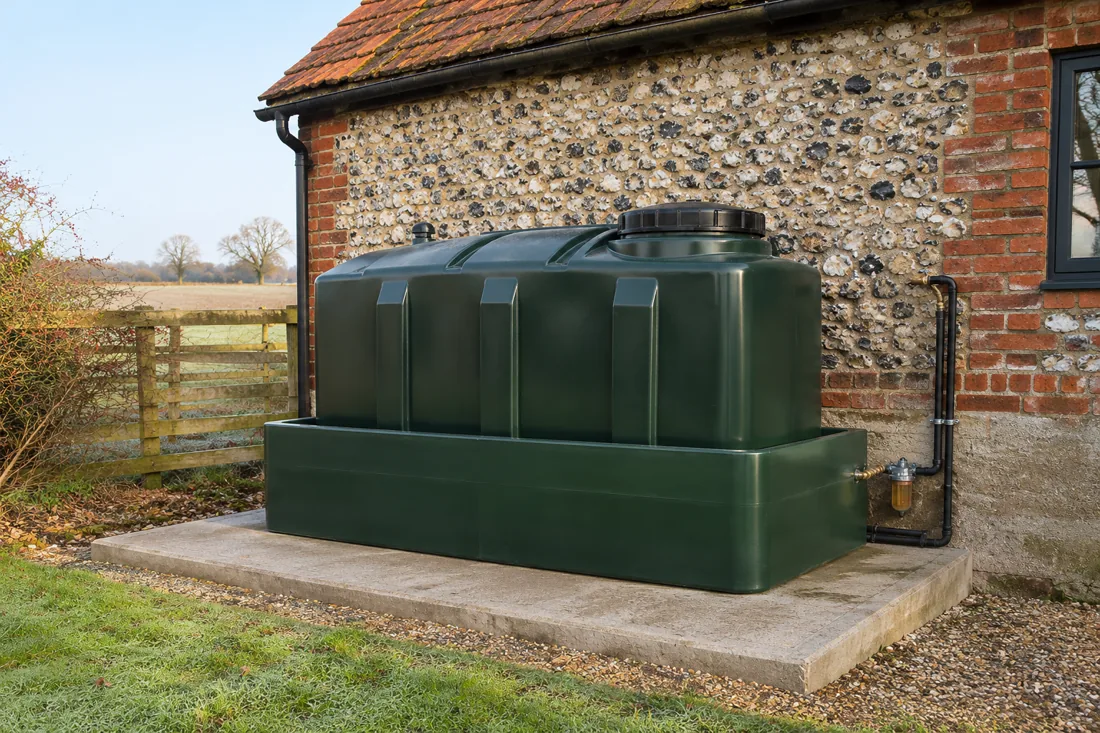
Horizontal, upright and narrow-profile tanks offer different ways to use the site. The outer dimensions of a bunded tank matter when measuring gates and clearances. A double wall described in a sales listing should not be assumed to provide the same containment as a properly designed bund.
A replacement is also an opportunity to review gauges, filling arrangements and the condition of the supply line. Reusing a pipe or fitting is a condition-based decision. It should be recorded in the quote, rather than left as an assumption based on the existing installation.
Check The Position And Base
For a home in England, GOV.UK confirms that new and replacement oil storage must meet Building Regulations. Agree the compliance route with the installer before work. Risk assessment determines whether secondary containment is needed, including the route a spill could take towards water or drains.
The assessment should also consider buildings, boundaries, combustible materials and access for inspection. Avoid choosing a location solely because the old tank has always stood there. An extension, a new window or a changed boundary may have altered the setting since the original installation.
The base must support the selected tank in accordance with its manufacturer's requirements. Old slabs can look level while the ground beneath has settled. If rebuilding is necessary, preparation and curing may govern the programme more than the physical tank changeover.
Plan The Oil And Heating Changeover
Before the old tank is disconnected, the supply equipment needs a planned shutdown. Recoverable oil can be held temporarily and returned if its condition is suitable. Contaminated material must be kept separate, and the amount recovered may differ from the gauge reading.
Ask about temporary storage if a new base, a changed position or a delayed tank delivery creates a longer gap. Temporary supply is a separate arrangement with its own setup, hire and collection costs. Its suitability and availability must be confirmed, particularly for businesses that cannot suspend a process or standby system.
A finished changeover includes checks of the new connections and operation of the connected system by the appropriate person. Agree who needs access to the boiler room or plant area. Keep the fuel supplier informed if the filling arrangement or tank capacity changes.
Build A Comparable Quotation
A useful replacement quote separates tank supply, base work, old tank removal, oil handling, pipework and commissioning. It should describe any assumptions about existing fittings and identify the treatment of excavated or contaminated material. Comparing only the tank purchase price can miss much of the job.
Access also affects the labour and equipment needed. Send photographs of the drive, side passage and any changes of level, as well as the installation position. Read our removal guide if the old tank is trapped behind later building work.
Handover And Future Care
Keep the manufacturer's information, warranty terms, commissioning records and the relevant Building Regulations compliance evidence. A commercial installation may also need updated drawings, asset records and operating instructions. Ask what paperwork will be supplied before accepting the quotation.
At handover, identify the fill point, gauge and inspection access. Keep vegetation away from surfaces that need checking, and report changes in shape, staining or support promptly. Arrange periodic professional inspections rather than treating the new tank as something that can be forgotten until it fails.
Questions About Oil Tank Replacement
Can The Remaining Oil Go Into The New Tank?
Remaining oil can sometimes be transferred into the replacement tank after its condition has been assessed. Water and sludge need separating from recoverable fuel, and badly contaminated oil may need disposal. Mention the quantity early so suitable temporary storage, filtration and the final fuel level can be allowed for in the quotation.
Will My Existing Base Be Reused?
An existing base can be reused for a replacement only if its condition, size and support meet the new tank requirements. Similar capacity does not mean identical dimensions or loading. Send a clear photograph of the whole base and any cracks, sinking edges or unsupported areas so rebuilding can be considered before the changeover.