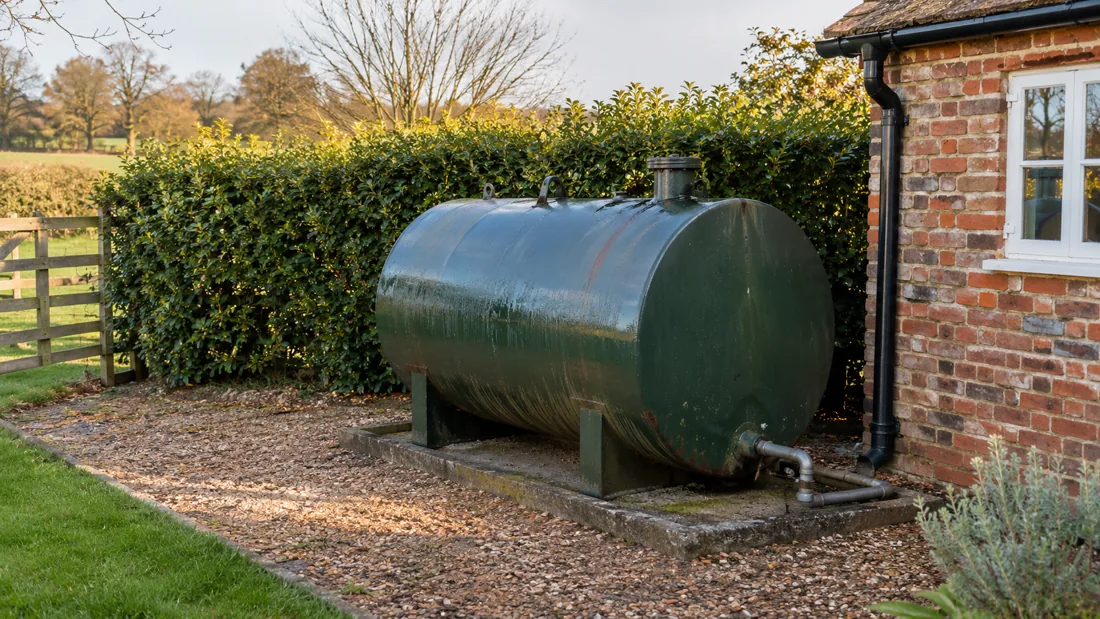
Decide What Should Leave
If you are moving away from oil heating, a removal can be a standalone job. If the tank still feeds a boiler, generator or other equipment, first decide how that equipment will be supplied afterwards. A tank that looks redundant may share a fill point or pipe run with another system.
Identify whether you want the tank only removed, the exposed pipework taken away, or the base cleared too. Breaking out concrete, repairing walls and landscaping are separate tasks unless included in the quotation. Being precise about the final condition avoids a cleared tank leaving an unexpected building job.
The Removal Sequence
The work begins with an assessment of the tank material, condition, previous contents and access. The contractor then agrees isolation of connected equipment, fuel recovery and the removal method. On a working business site, that planning also covers permits, pedestrian separation and the shutdown window.
Remaining liquid is recovered before sludge and residues are removed. The tank can then be prepared for lifting out whole or dismantling into manageable sections. Cleaning and atmosphere assessment come before cutting, and the method must suit the tank and surroundings.
Cold cutting may help where a tank cannot pass through a gate or doorway. It is still specialist work, with precautions determined by the assessment. HSE warns that apparently empty containers can retain residues capable of producing explosive vapour, so do not cut, drill or burn an old tank yourself.
Access Is Often The Deciding Factor
A narrow side passage does not automatically rule out removal. Send the narrowest gate width, steps, sharp turns and a photograph looking from the tank towards the road. A tank installed before an extension or fence was built may need a different route out.
For larger steel tanks, vehicle positioning, lifting space and ground strength need checking. Mention overhead cables, drains under the driveway and any shared access that must stay open. Across rural Essex, a gravel drive or soft verge should not be assumed suitable for a loaded collection vehicle.
Do not move fences or prune heavily before the method is agreed. A photograph with approximate measurements can establish whether that work is useful. Keep children, pets and other site users away from the proposed working area on the day.
What Happens To The Oil?
Tell us the approximate gauge reading and when the tank was last filled. Usable fuel may be retained for an agreed receiving tank, while water, sediment and unsuitable liquid need a waste route. Oil is not automatically reusable simply because it looks clear from the top.
If you are also replacing the tank, link the removal and replacement programme so temporary storage and reconnection are considered together. Do not try to run a damaged tank dry to reduce the quantity left. A suspected leak changes the priority from routine removal to containing further loss.
What Changes The Quote?
Capacity and construction matter, but so do fuel volume, cleaning needs and the amount of dismantling required. A whole-tank lift, a sectioned removal through a house and an excavation are different scopes. Buried tanks require the separate assessment described in our underground tank guide.
Ask whether the price includes fuel handling, collection, base work and reinstatement. Restricted hours, parking arrangements, lifting equipment and additional waste found on the day can affect cost. Agree how any unexpected contamination will be investigated and priced before authorising further work.
Records Worth Keeping
Ask for a written description of what was removed and confirmation of the disposal route. Waste transfer or hazardous waste documentation depends on the material and the movement involved. A gas-free certificate is relevant to particular work methods, rather than a universal document for every collection.
For a commercial property, include the agreed risk assessments, method statements and any lifting arrangements in the job file. For a home sale, keep the completion information with the property records. The contractor's actual waste-carrier details should be confirmed before collection, rather than inferred from a brand name.
Questions About Oil Tank Removal
Can A Tank Be Removed Without A Replacement?
Oil tank removal can be arranged on its own when oil heating has been retired or the tank is no longer needed. The enquiry should explain whether the connected appliance is already decommissioned and whether redundant pipes or the base should also go. Those decisions determine the scope and the condition of the space afterwards.
Must I Empty The Tank Before Removal?
You do not need to empty the oil tank yourself before removal. Give an estimate of what remains so recovery equipment and a receiving or disposal route can be planned. Do not transfer fuel into improvised containers, and mention water, sludge or a suspected leak before a routine collection date is discussed.