Start With The Use Of The Fuel
For a home, explain the heating and hot-water demand, the appliance being connected and the preferred delivery frequency. For a business, include operating hours, peak fuel demand and any standby requirement. A generator supply has different operational priorities from a tank serving regular space heating.
State the fuel clearly and identify any possibility of changing it later. Storage equipment, seals, dispensing arrangements and the connected appliance need to be compatible with the intended contents.
If an old installation is present, include it in the enquiry even when the new tank will stand elsewhere. Redundant lines and fill points need an agreed future. See oil tank replacement when removal and a new supply must be coordinated.
Choose A Position That Can Be Serviced
The most discreet corner is not always the most suitable position. The assessment needs to consider fire exposure, nearby openings and boundaries, inspection access and the route a spill could follow. A tank hidden behind a new screen must still be accessible for checks and delivery.
Think about the full life of the installation. The delivery driver needs a workable filling arrangement, and maintenance personnel need access to fittings without climbing over stored materials. On a commercial site, avoid exposing storage to vehicle movements unless suitable protection is part of the design.
In an Essex village or farm setting, tell us about wells, streams, drainage ditches and sloping hardstanding. These are questions for the survey, not evidence that a particular tank design will automatically be approved. A position close to historic fabric may also need planning or conservation advice.
Match The Tank And The Base
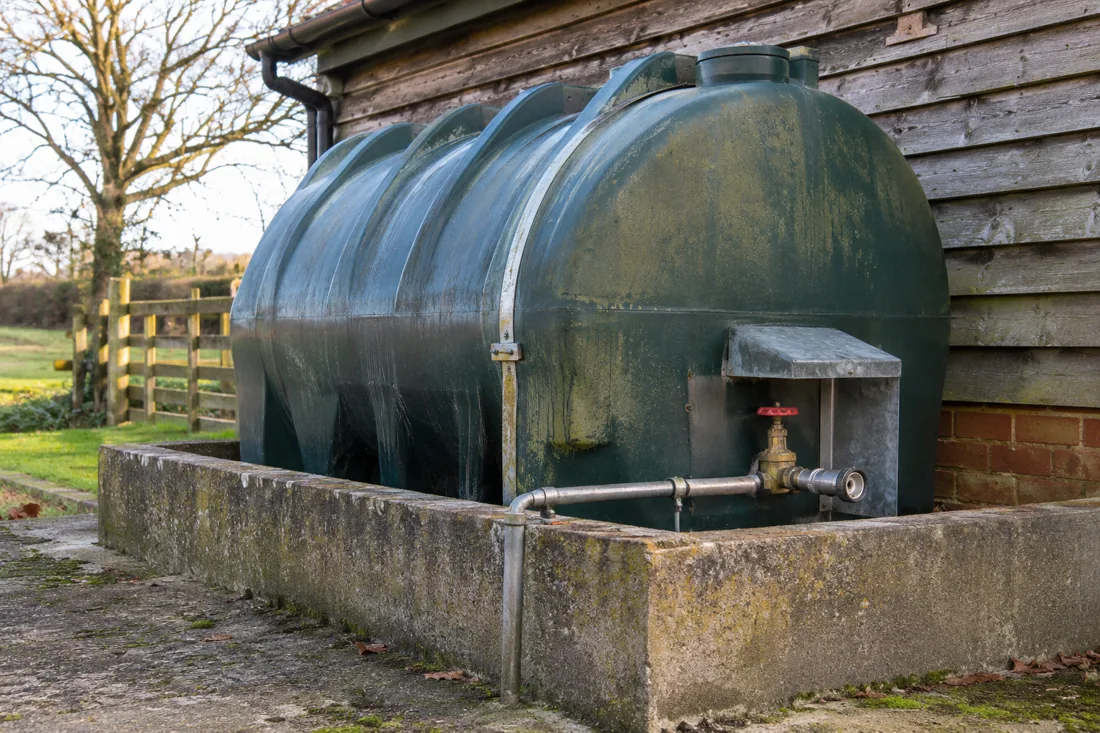
Capacity, tank profile and material should be selected together. A narrow-profile unit may solve a footprint problem while creating delivery or inspection constraints. Steel and plastic each require support and handling appropriate to the particular model, rather than a general rule based only on the material.
A bund provides secondary containment around the primary tank. Specify the complete containment arrangement and how fittings are accommodated. GOV.UK's business oil storage guidance distinguishes commercial storage from domestic, agricultural and underground situations, so the applicable route should be established rather than copied from another property.
Ground preparation is part of the installation design. The base must suit the manufacturer's support requirements and the loaded tank. Drainage, settlement, levels and the curing time of new concrete should be considered before booking the tank delivery or promising a connection date.
Coordinate The Work On Site
The installation sequence should identify who prepares the ground, who delivers and places the tank, and who connects and checks the fuel system. Where several trades are involved, one programme should describe the handovers. This is especially useful on a wider building project with changing access.
Pipework routing needs assessment for damage, inspection and the interfaces with the appliance. Any excavation should account for known underground services and the reinstatement required afterwards. Do not dig a trench or make a live electrical connection from general online instructions.
Before filling, the relevant installation checks need to be completed and documented. The delivery quantity must suit the actual capacity and operating arrangement. Agree who will arrange the first fill and who will be present for commissioning and the demonstration of controls.
Information That Makes Pricing Useful
Send the postcode, intended fuel and use, proposed capacity if known, and pictures showing the position from a distance. Include the route from the road, gate measurements, slopes and any overhead restrictions. A simple marked-up site plan can be more useful than close-ups alone.
Costs depend on the selected tank, containment, groundwork, length and complexity of pipework, and lifting or access equipment. Planning enquiries, fire protection measures and changes to connected plant can add separate work. Ask for exclusions and provisional allowances to be made visible in the written quote.
Approval, Handover And Ownership
For domestic work, confirm how Building Regulations compliance will be handled and what evidence will follow. Use the official home oil storage guidance to discuss the installer and Building Control route. Planning permission and building compliance are separate questions.
Keep equipment manuals, warranties, commissioning results and the agreed inspection recommendations together. Business users should also update their asset information and fuel-handling procedures. A clear handover explains how to identify a problem and who to contact, without expecting the customer to adjust or repair the fuel system.
Questions About Oil Tank Installation
Can A New Tank Go Anywhere In The Garden?
A new oil tank position needs assessment for support, fire exposure, inspection access, filling arrangements and pollution risk. A location that looks convenient may be unsuitable once nearby buildings, drains or water sources are considered. Send a wider photograph of the proposed area before ordering a tank or carrying out groundwork.
What Is Included In An Installation Quote?
An oil tank installation quote should identify the tank, base preparation, containment, connections and commissioning, with the first fill and any removal work addressed separately. Ask who arranges approvals and whether excavation, reinstatement or electrical work is included. The written scope should make responsibilities clear where more than one contractor is involved.