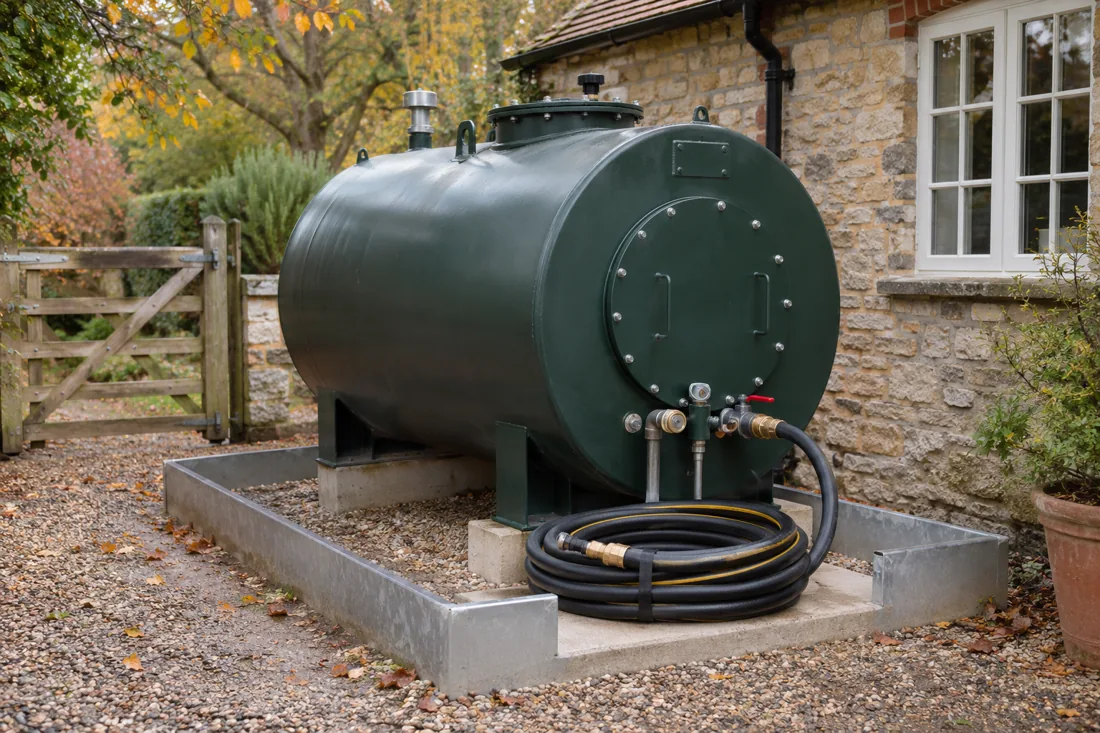
Is Cleaning The Right Response?
A boiler that stops running does not prove that its tank needs cleaning. An appliance fault, supply restriction or failed component may produce similar symptoms. Tell us what has already been checked, whether filters have recently been changed and whether problems began after a delivery.
Water can collect beneath the oil, while sediment and microbial contamination can form deposits that move into filters and pipework. Sampling helps establish what is present and whether usable fuel can be separated. The treatment should follow the evidence rather than a fixed calendar-based cleaning package.
Cracks, distortion and leaking seams need a different response. Cleaning a structurally failed tank will not restore it. Where the condition makes continued use unsuitable, discuss replacement and how the contents will be recovered instead of paying for a clean that leaves the original problem.
What The Cleaning Process Involves
An assessment covers the tank construction, access openings, fuel quantity and the way connected equipment can be taken out of use. The contractor needs an agreed area for recovery equipment and, where required, a temporary holding tank. Fuel storage and waste storage must remain distinct.
Usable oil is recovered into appropriate temporary storage. Water, sludge and loose sediment are then removed using equipment selected for the tank. Cleaning may involve mechanical agitation or other suitable treatment, but the method should respect the tank material, condition and internal access.
Recoverable fuel can be filtered and returned if it meets the agreed requirements. Filtration is not a promise to restore every degraded fuel to usable condition. Ask how suitability will be assessed and what happens if the amount worth saving is lower than expected.
The accessible tank surfaces and fittings can then be checked for defects that could let contamination return. The system should be brought back into service under the agreed procedure. Any appliance service or fuel-line repair needs to be identified as a separate task when it falls outside the clean.
Protect Heating And Business Continuity
A domestic heating system will be unavailable while its supply is disconnected and fuel is being handled. Choose an appointment around household needs and discuss any vulnerable occupants. Lower heating demand can make planned work easier, but active faults should not be left unattended simply to wait for summer.
A commercial tank may support a generator, process or heating system that cannot stop casually. State the permitted outage and any backup arrangement before the method is selected. Larger storage, multiple compartments or a shared supply can change both the sequence and the temporary storage requirement.
Where entry is contemplated, specialist assessment and appropriate controls are needed. Do not climb inside, open unfamiliar access covers or use household equipment to suction out fuel.
Access And Information To Send
Include the tank capacity, material, fuel type, approximate quantity left and a description of the symptoms. Photograph the tank from each accessible side, the fill point and the approach from the road. Mention covers that are obstructed, narrow gateways and any route crossing occupied rooms.
On rural Essex properties, identify soft ground, long hose routes and shared drives. For business premises, include induction arrangements, security access and restrictions on vehicle parking. Tell us if the tank is underground, because the access and contamination investigation may need the buried tank route.
Cost, Waste And Completion Records
Cleaning cost is influenced by volume, contamination, recovery access, temporary storage and the selected method. The amount of waste may only be confirmed after assessment. Ask whether sampling, filtration, replacement fuel, filter work and disposal are included or priced separately.
Waste liquids and residues need classification and a suitable authorised route. Documentation depends on what is removed and how it is moved. Keep the service record, any sampling results and relevant waste records, especially if repeated contamination has affected a commercial fuel system.
Reduce The Chance Of A Repeat
A clean should be followed by a discussion of likely contamination sources. Damaged caps, poorly protected openings or defects in the tank need attention, otherwise fresh fuel may be affected again. Keep inspection areas visible and arrange professional checks appropriate to the installation.
Record when symptoms return, recent deliveries and any water or filter findings from subsequent service visits. That history can help distinguish recurring ingress from another problem. A cleaning record should explain what was found.
Questions About Oil Tank Cleaning
Can All Of The Oil Be Saved During Cleaning?
Oil recovery during tank cleaning depends on the condition of the fuel and how it is mixed with water or sludge. Some may be filtered and returned, while unsuitable liquid needs disposal. Agree the assessment, temporary storage and replacement-fuel arrangements before the visit so a reduced usable quantity does not become a surprise.
Does Cleaning Repair A Leaking Tank?
Oil tank cleaning does not repair a leaking or structurally damaged tank. It removes contamination from storage that is suitable to remain in service.
If cracks, weeping seams or serious distortion are present, describe those first and use the leaking tank guidance. Fuel recovery and replacement may be the more appropriate scope.